Have you ever felt stuck like you’re ready to move forward but God keeps telling you to wait? In Acts 1, the disciples had the mission, the calling, and the urgency but Jesus told them to stay. To wait. Not to rush ahead, not to take control but to trust that something greater was coming. This message is for anyone in a waiting season. If you’ve been wondering why God hasn’t opened the door yet, why the answer hasn’t come, or why things feel delayed there’s purpose in it. God doesn’t make you wait to hold you back. He makes you wait to prepare you. Before the power came, there was a promise. Before the movement, there was a moment of surrender. Before the wind of God moved they waited.


Follow along with the field guide
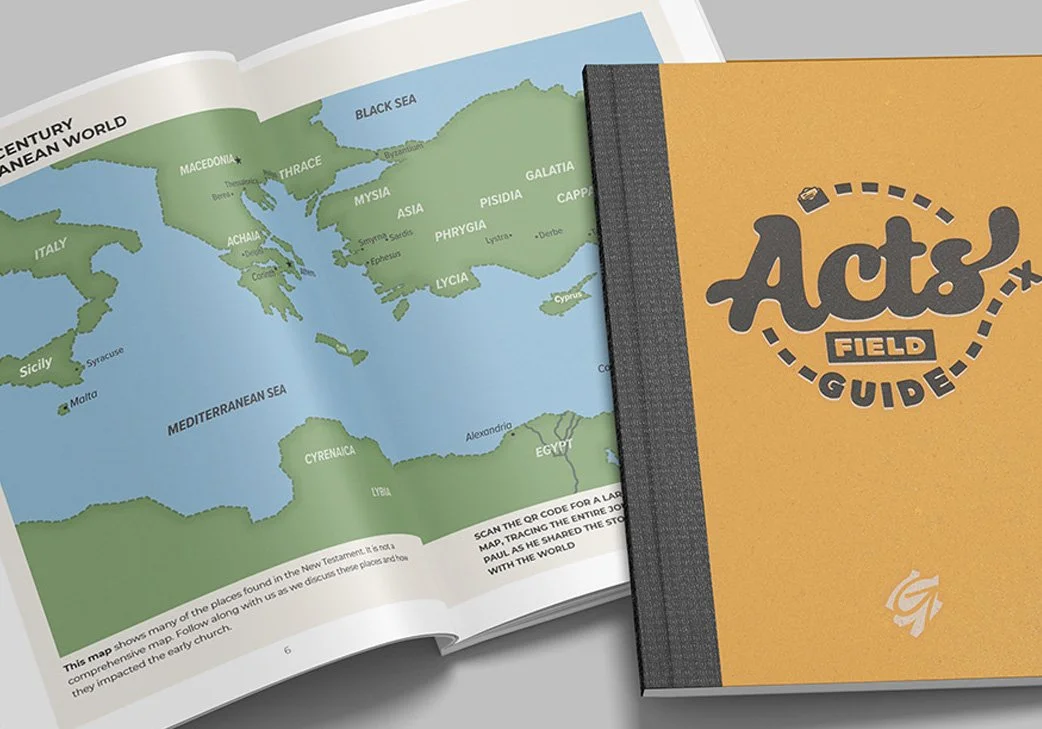
The Spirit is on the move. Download your Field Guide and bring it each week — there's space inside to write, reflect, and record what God is saying to you through Acts.
Digging Deeper
Digging Deeper: Wait on the Wind
LEAN IN
- Think about a time when you had to wait for something important (a game, a result, an answer, a breakthrough). What made that waiting difficult? What did it reveal about you?
LOOK UP – Observation, Interpretation, Application (OIA)
Read Together: Acts 1:1-26
OBSERVATION – What Does the Text Say?
- What do you notice about what Jesus does after His resurrection?
- What specific command does Jesus give His disciples before ascending?
- What are the disciples doing while they wait?
- What stands out to you about how they choose Matthias?
- What are you curious about in this passage?
INTERPRETATION – What Does the Passage Mean?
- Why do you think Jesus told them to wait instead of immediately going out?
- What does this passage teach us about the role of the Holy Spirit?
- What do you learn about God’s character (His timing, His promises, His power)?
- What do you learn about humanity (our tendencies, struggles, or needs)?
APPLICATION – What Does the Passage Mean?
- Where in your life do you feel like you’re in a season of waiting right now?
- How are you encouraged, challenged, or convicted by this passage?
- What would it look like for you to actively wait instead of passively waiting?
- What should be our response to God’s command to wait and depend on Him
REFLECT
- What is one area where you’ve been trying to move ahead without God’s power instead of waiting on Him?
- How can you create space this week to slow down and listen for God’s voice?
Scripture References
- Acts 1:1–9, 12–14, 15–26
- John 16:7
- Isaiah 40:28–31
Prayer
Spend time praying through these together:
- Surrender:
“God, help us release control and trust your timing.” - Dependence:
“Holy Spirit, remind us that we need Your power, not just our effort.” - Patience in Waiting:
“Teach us to wait with expectation, not frustration.” - Unity:
“Form us into a people who are aligned in heart, mind, and purpose.” - Readiness:
“Prepare us for what You want to do in and through us.”
STEP OUT – Practice This Week
Here are a few ways to walk this out this week:
- Create Space Daily
Set aside 5–10 minutes each day to be still—no phone, no distractions. Simply sit, pray, and invite the Holy Spirit to speak. - Pray with Expectation
Write down one thing you’re waiting on God for. Pray about it every day this week, believing that He is at work even now.
Obey What You Already Know
Identify one thing God has already asked of you (forgiveness, generosity, serving, etc.) and take a step of obedience this week.
Message Transcript
Well, good morning everyone. So glad that you’re here this morning. If you’re at the North Campus, help me welcome everybody watching from other campuses down the South, and to those who are watching online. So good to have you. I don’t know about you, but I’m so glad it’s raining, I really am. And for those of you watching from home because you don’t like the rain, God bless you. The rest of us are out and about. It is so good.
We are in this series on Acts, and we’re going to be in it for a while where we’re unapologetically going to spend the next few months in the book of Acts. And just so you know, to be able to teach through the book of Acts, verse by verse, it would actually take about a year and a half to two years. So we’re going to cover the major themes. We’re going to cover some of the passages over the next few weeks.
And to help you, one of the things that we’ve provided is at each campus, you’ll have this resource. You may have received it when you walked in, or it might be in the lobby at your campus. It has a QR code, and I encourage you—I really would just really challenge you—to click this QR code. It is in partnership with the resource and there’s videos on there. So for those of you who don’t like to read, there are videos you can watch to give us an understanding of what’s happening in this passage.
What are we talking about in this series? It’s really stirring my heart as pastor, but it’s really been in our queue for more than six months; actually, we knew that we were going to be teaching on this maybe even nine months ago. It was early last fall. And really just knowing that God was going to do something in us in this series. And so as we dive in, if you have your Bible with you, bring it with you every week. If you have it at home, just come on—we kind of have a habit of having it with you. If you don’t have a Bible, talk to somebody at your campus and we’ll provide a Bible for you. We just want you to be in God’s Word with us. We call it the Bible, called Scripture, and people call it God’s Word all the time because we do believe that’s how we understand who God is.
Matter of fact, if you look at the back of this resource, there’s a few questions that we want you to ask yourselves as you read. One of them is: what do you observe about the passage? What interpretation—what does this passage mean as you read it? What is the application of it? Are there any repeated themes that you read? What did you see the disciples doing in the passage? And we learn about who God is. So I know we sometimes see these resources and we walk right past them, or we take them and put them in our purse or put them in a bag. I’m encouraging you to dive into it.
This few months, as we go through the book of Acts, we are going to start in chapter one. The sermon is titled “Waiting on the Wind,” just waiting for the wind of God. The Holy Spirit has all sorts of names that we’ll get into throughout this series, but one of those is “wind.” As the wind of God moves, you cannot control the wind; you have to line up with the wind. And we’re going to learn about that in chapter one.
But one of the things I want us to understand is that we really get uncomfortable when it comes to waiting. We get uncomfortable when it comes to traffic. I mean, I’ve lived in Austin over six years now, and not one person has said to me they love MoPac. Nobody’s ever said to me, “I love I-35.” I moved here from Seattle, but I lived in Dallas for most of my adult life. When we were moving, my wife Libby said, “Where do you want to move?” and I said, “Anywhere not near 35,” because I grew up on I-35 and we don’t like it. We don’t like the traffic; we don’t like the construction.
We live in a culture where we resist waiting. We’ll do anything to not have to wait. We’ll pay the extra $9.99 to get that package a day early. We don’t like the tension that comes with waiting. And yet, when it came to the early church, what we learn about the first church was that it started with the posture of waiting—of sitting in the tension. It begins with waiting, and the movement that we see that we now are part of thousands of years later started with people who waited, who sat, who prayed, who lived in the tension.
We live in a culture nowadays where we say tension is bad. And I’ve started saying this over the last couple of years, especially when I’m doing pastoral counseling or talking to people struggling through things in marriages or with kids or at work. I started asking people, “Why are we running from tension?” You can’t actually build anything without it. Every home, every building needs tension—the right kind of tension pulling on itself to keep the thing up. You don’t want to walk into a house or a building that has no tension. You ever seen those videos where somebody builds a house and the first storm comes and the entire new house just blows over? It wasn’t built well. But we live in a culture that says it doesn’t matter, just go for it. And yet we learn in Scripture what it means to depend on God completely.
In chapter one, verse two, it says Jesus began to do and to teach until the day he was taken up to heaven. After giving instruction through the Holy Spirit to the apostles he had chosen, and after his suffering—after he died on the cross and was resurrected—he presented himself to them and gave many convincing proofs that he was alive. He appeared to them over a period of 40 days and spoke about the kingdom of God.
Last week we celebrated Easter. Jesus comes back from the dead and he spends 40 days with his followers, reinforcing some of the teachings that he had, reinforcing who he was. 40 days of conversations, 40 days of making sure people understood what was happening. And you’re like, “Well, why would Jesus have to reinforce it?” Have you ever taught in a classroom before? Have you ever raised kids? How many times do you have to reinforce something?
My youngest is almost 11, and I still have to reinforce what it means to take a shower. He says, “Dad, I’m almost 11, you don’t have to teach me how to take a shower.” No, but I do have to remind you. See, Jesus is coming back and reinforcing what he’s already taught. And how many of us, no matter how old we are, need some reinforcing in our life—a relearning and understanding? He lingers and he spends time with them; he doesn’t rush off to heaven right away. 40 days of doing this.
Why does this happen? Because he is continuing formation. They are being shaped. We are constantly being formed. But what are we being formed and shaped by? That’s probably the bigger question. You’ve got to remember the first time when Jesus died, what happened to the followers of Jesus? They scattered. These men ran away. They were not in unison. They almost forgot everything he had taught. So when Jesus comes back from the dead, he spends 40 days saying, “Okay, the first time you didn’t get it, but now I’m with you and I’m going to reinforce what it means, what you are called to do.” He gives them a command that may have felt confusing. He says, “Do not leave Jerusalem, but wait for the gift my father promised.”
We see this right there in the book of Acts. “Don’t leave Jerusalem. I’m not going to tell you why. Just wait.” He didn’t give them a strategy. He didn’t give them a playbook. He didn’t tell them how to mobilize. Waiting? Really? That’s all we’re supposed to do is wait? We already have the tension of Jesus dying on the cross. You have the tension of him coming back and spending 40 days teaching, and you’re going to add more tension by asking us to wait?
Our carnal nature just wants the thing that we want. When Libby and I were dating, we had a time where we weren’t going to talk for a while because she made a commitment to Jesus that she wasn’t going to date. I waited for two months—not talking, not doing anything. Now, I called her mom because I still wanted to know what she was doing. Kind of stalker-ish, I know! But the first time I saw Libby after a few months, I flew to Iowa. We finally drive into town and our first date was at Culver’s. We sit there eating burgers, and I pour my heart out to her. I can’t wait for us to be together! And Libby looks at me and says, “That’s nice.” Are you serious? “That’s nice?” You know what she was doing? She was making me wait longer.
That’s the kind of feeling that Jesus elicits in his disciples. He’s like, “Hey, I know you’re expecting this movement, but I’m asking you to wait. Can you sit in that tension?” See, the mission of God cannot be carried out by human enthusiasm alone. It requires divine power. He was asking the disciples to wait for God’s timing and to not do it in their own strength. How many times do we see a movement that relied on emotion or human power, and it never lasted very long? This mission needed divine power.
John 16:7 says, “It is for your good that I am going away. Unless I go away, the advocate—or the comforter—will not come to you.” Jesus is adding more tension. He says, “I’m going away. It’s important that I go away.” Why? Because when he goes away, the promise of God the Father—the Spirit—will come. The Spirit of God was going to be in them, not just with them. Jesus was with them, but Jesus could not be in them. So God sent His Spirit to be in them, to guide them in all truth and in all righteousness. Jesus knows something good is coming if you will just wait.
Tax season is a fun season for me as a dad because I usually have one kid trying to figure out how to do their taxes. My daughter Ava is filing for the first time. She’s texting me, “Dad, what do I do?” I told her, “Follow the prompts, do a first pass, and before you file, I’ll take a look at them.” I am with her in the tax season. The difference with my older adult children is that the knowledge of how to do their taxes is now in them. Ava needs me to be with her to guide her; I am with her. But my older kids have that knowledge in them. Jesus says, “Lo, I am with you always.” The work of the cross is sustainable. I am with you, but what comes after that will be in you. His spirit will be in you.
Internal power outweighs external direction. Acts 1:8 says, “You will receive power when the Holy Spirit comes on you, and you will be my witnesses.” Listen to the order of events. You will receive power, then you will be my witnesses. We can’t fulfill the mission in our own strength. We need to stop trying to do it in our own power and learn to wait and trust.
The disciples didn’t like it. They asked, “Lord, are you at this time going to restore the kingdom of Israel?” They’re still thinking about themselves. They’re asking if the pressure is finally going to be relieved. And the response from Jesus is: “Wait.” I don’t want to wait anymore. “Wait.” Then he says, “It is not for you to know the times or dates the father has set.” You don’t need any more information. You need to take what you know and now be shaped in the image of God.
We have to surrender our expectations, our timelines, our goals, and our dreams for His. Why do we wait? Because Jesus says you will be given power to be witnesses in Jerusalem, Judea, Samaria, and to the ends of the earth. You’re going to go to the uncomfortable, divided places. To go everywhere, you need God’s power. If your dream came true today, would you know what to do with it? Or would you take a dream come true and live it out in your own strength?
So what do we do when we’re told to wait? We actively wait. In verse 12, the apostles returned to Jerusalem from the Mount of Olives. They actually did what Jesus told them to do. About a year ago, I told my son Max to do three things in his room. I couldn’t find him later and assumed he forgot. I went to his room and he had done all three. I was shocked! The disciples’ track record usually showed otherwise, but in this instance, they actually obeyed.
What was the last thing that you know you were supposed to do? Maybe it’s an apology you’ve held off on, or a bill you need to pay, or reaching out to a family member. The apostles didn’t hold off; they went and did the very thing they were supposed to do. And when they got to the room, they all joined together constantly in prayer. They were faithful to actively wait. Waiting is never wasted; it is formation. God uses the waiting period to form us and shape us. Waiting reveals what we trust.
As part of actively waiting, they reassembled the team. They needed a 12th leader to replace Judas. They didn’t choose the person with the most charisma or gifting. They chose someone who was faithful—someone who had been with them the whole time. It came down to Joseph and Matthias, and they trusted God with the outcome. We want to move, and God calls us to wait. We want to build something, but God calls us to receive a gift that we cannot build. The Holy Spirit is not a reward for effort; the Holy Spirit is a gift of grace.
Two years ago, when we started making changes at Gateway, I sat in my office trying to game-plan. I literally heard a voice say to me, “Don’t do it.” I sensed God saying, “Don’t try to lead this church in your own strength or with human ingenuity. Will you wait with me?” It has been a difficult few years, but God is doing something. There is a lot of tension in waiting, but Isaiah 40:31 says, “Those who hope in the Lord will renew their strength. They will soar on wings like eagles; they will run and not grow weary, they will walk and not faint.”
We’re called to wait even when it doesn’t benefit us. We actively wait by doing five things:
-
We slow down enough to listen.
-
We pray with expectation.
-
We obey what we already know.
-
We pursue unity.
-
We release control.
You and I cannot manufacture a real move of God. What we do is become less of us so there’s more of Him. The invitation is not to rush ahead. The invitation is to wait. And if we wait long enough, the wind of God moves, and the answer comes in a way we did not expect.